
The Daydreaming Brain: How Mind-Wandering Unlocks Creativity, Planning, and Emotional Health
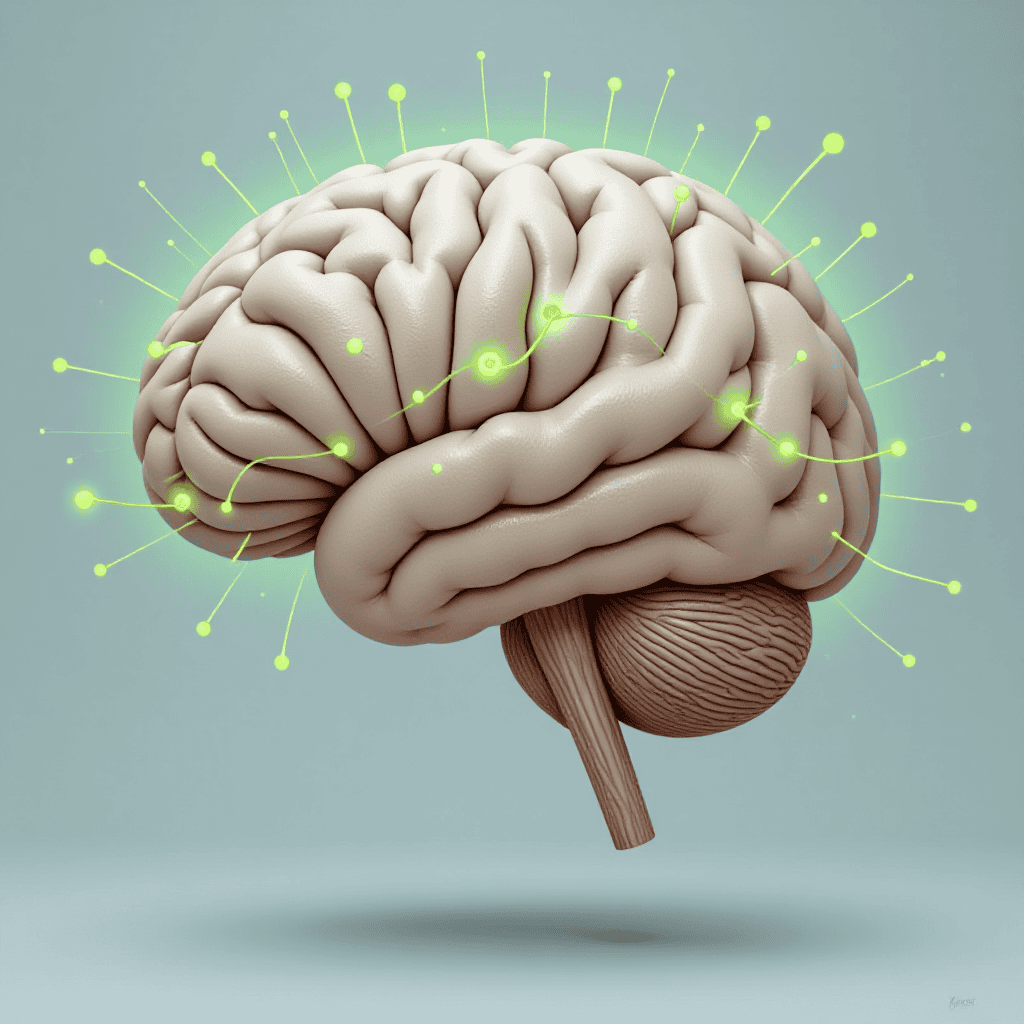
We’ve all experienced it: your eyes drift away from the screen, a meeting fades into background noise, or you arrive home with little memory of the drive. For decades, this mental drifting was dismissed as a failure of attention. Today, neuroscience tells a very different story.
The daydreaming brain operates through a highly organized system known as mind-wandering or self-generated thought. Far from being idle, this state represents one of the brain’s most metabolically active and cognitively sophisticated modes. When your mind seems “off task,” it may actually be doing some of its most important internal work.
The Busy Brain at Rest: The Default Mode Network Explained
When external focus fades, the brain shifts into a coordinated pattern called the Default Mode Network (DMN). This network includes the medial prefrontal cortex, posterior cingulate cortex, and parts of the hippocampus—regions deeply involved in self-reflection, memory, and emotional meaning.
The DMN enables what neuroscientists call mental time travel: recalling past experiences and simulating possible futures. This is not passive activity. Brain imaging studies show that the DMN consumes substantial energy and interacts dynamically with the Executive Control Network, allowing unresolved problems to be processed subconsciously.
Physiologically, mind-wandering is associated with increased frontal alpha-wave activity, reflecting a relaxed but alert mental state. More recent research (2024) links vivid daydreaming to hippocampal sharp-wave ripples, bursts of electrical activity that retrieve and recombine memories—essential for imagination, insight, and narrative thinking.
The Science-Backed Benefits of Daydreaming
When allowed to unfold naturally, mind-wandering serves several adaptive and measurable functions.
Future Planning and Prospection: A large proportion of daydreams are future-oriented. The brain rehearses conversations, anticipates challenges, and explores long-term goals. This mental simulation improves decision-making, empathy, and social cognition.
Creativity and Insight: Creative breakthroughs often emerge when focused effort stops. Studies consistently show that brief periods of mind-wandering enhance divergent thinking and problem-solving. The daydreaming brain forms loose, novel connections that rigid attention suppresses.
Emotional Regulation: Constructive daydreaming—such as recalling positive memories or imagining hopeful futures—can reduce cortisol levels and ease anxiety. This functions as a cognitive recovery state, especially in overstimulated environments.
Memory Consolidation: Quiet wakefulness allows the hippocampus to stabilize new memories. Without these mental pauses, learning becomes fragmented. In this sense, daydreaming helps the brain “save” experiences for long-term use.
When Mind-Wandering Turns Harmful
Not all daydreaming is beneficial. Researchers distinguish healthy mind-wandering from patterns that impair function and emotional well-being.
Maladaptive Daydreaming (MD), first described by Dr. Eli Somer, involves compulsive, immersive fantasy that replaces real-life engagement. Episodes can last for hours and may include repetitive movements such as pacing or mouthing dialogue.
Another risk is ruminative mind-wandering. Individuals prone to depression or anxiety are more likely to experience repetitive negative thoughts about the past or future. This pattern is strongly linked to mood disorders.
| Type | Features | Impact |
|---|---|---|
| Adaptive Daydreaming | Brief, flexible, often creative or future-focused | Supports insight, planning, emotional balance |
| Maladaptive Daydreaming | Compulsive, immersive, time-consuming | Disrupts relationships and daily function |
| Ruminative Wandering | Negative, repetitive thought loops | Linked to depression and anxiety disorders |
How to Harness the Power of the Daydreaming Brain
Research suggests that intentional structure—not suppression—is the key to healthy mind-wandering.
Schedule short, screen-free mental breaks. Practice meta-awareness by noticing when thoughts drift. Gently guide daydreams toward constructive planning or positive memory recall. If worry dominates, contain it using designated “worry windows.”
Persistent, uncontrollable, or emotionally dark daydreaming may signal underlying conditions such as depression, severe anxiety, or early cognitive changes including Alzheimer’s disease. In these cases, professional evaluation is essential.
The Takeaway
The daydreaming brain is not a flaw—it is a feature. By understanding how mind-wandering works and when it helps or harms, we can respect the brain’s natural rhythms while staying grounded and intentional. Knowing when to let your mind roam and when to rein it in may be one of the most powerful cognitive skills you can develop.
References
1. Kucyi A, Esterman M, Riley CS, Valera EM.
Spontaneous default network activity reflects behavioral variability independent of mind-wandering
.
Journal of Neuroscience. 2016.
2. Mason MF, Norton MI, Van Horn JD, Wegner DM, Grafton ST, Macrae CN.
Wandering minds: The default network and stimulus-independent thought
.
Science. 2007.
3. Kucyi A, Karen D Davis .
Dynamic functional connectivity of the default mode network tracks daydreaming
.
NeuroImage. 2014.
4. McCormick C, Rosenthal CR, Miller TD, Maguire EA.
Mind-wandering in people with hippocampal damage
.
eLife. 2018.
5. O’Callaghan C, Walpola IC, Shine JM.
Neuromodulation of the mind-wandering brain state: hippocampal sharp-wave ripples and spontaneous thought
.
Philosophical Transactions of the Royal Society B. 2021.
6. Marcusson-Clavertz D, West M, Kjell ONE, Somer E.
A daily diary study on maladaptive daydreaming, mind wandering, and sleep disturbances
.
PLoS ONE. 2020.
Table of Contents
1. Is daydreaming a sign of a high or low IQ?
Contrary to the old belief that daydreaming is a sign of laziness, recent research suggests it is often linked to higher cognitive ability. A study by the Georgia Institute of Technology found that people who reported frequent mind-wandering scored higher on intellectual and creative tests. This is because a “larger” brain capacity allows you to perform routine tasks while simultaneously maintaining a complex internal narrative.
2. How much of the day does the average person spend daydreaming?
Evidence from a famous Harvard University study indicates that people spend approximately 47% of their waking hours mind-wandering. This suggests that the human brain is evolutionarily “wired” to drift away from the present moment nearly half the time, primarily to plan for the future or process social information.
3. What is the difference between mind-wandering and Maladaptive Daydreaming?
Scientific research distinguishes the two based on control and impact. Mind-wandering is a brief, often involuntary shift in attention. Maladaptive Daydreaming (MD) is a compulsive, intensive form of fantasy that can last for hours and interferes with work, sleep, or relationships. MD is often accompanied by repetitive physical movements (like pacing) and is increasingly studied as a distinct clinical condition.
4. Can daydreaming actually improve productivity and creativity?
Yes. Research into the “Incubation Effect” shows that taking a mental break through daydreaming helps solve complex problems. When the brain enters the “Default Mode Network” (DMN), it makes loose associations between distant ideas that the focused, logical mind would miss. This is why many “Aha!” moments happen during low-demand tasks like showering or walking.
5. Does daydreaming cause unhappiness or depression?
It depends on the content and direction of the thoughts. While some studies suggest that “a wandering mind is an unhappy mind,” more recent research shows that future-oriented and positive daydreaming actually improves mood. However, if mind-wandering turns into rumination (fixating on past failures) or worry (fixating on negative futures), it is strongly correlated with increased levels of anxiety and depression.
6. What happens in the brain when we “zone out”?
Neurologically, your brain switches to the Default Mode Network (DMN). This involves the medial prefrontal cortex and posterior cingulate cortex. Interestingly, research shows that during “vivid” daydreaming, the Executive Control Network (the part used for focused work) also stays active, suggesting that the brain is working harder than we realize to construct these internal scenarios.
7. How can I stop daydreaming when I need to focus?
Science-based recommendations include “Mindfulness-Based Cognitive Therapy” and the use of external cues. Research shows that grounding techniques—such as focusing on your breath or a physical sensation—can pull the brain out of the DMN and back into the Task-Positive Network. Additionally, scheduling “intentional daydreaming” breaks can reduce the brain’s urge to wander during high-stakes tasks.

Life in Balance MD is led by Dr. Amine Segueni, a board-certified physician dedicated to delivering clear, evidence-based health insights. His passion is helping readers separate facts from myths to make smarter, healthier choices. Content is for educational purposes only and not a substitute for medical advice.
- Amine Segueni, MD

- Amine Segueni, MD

- Amine Segueni, MD

- Amine Segueni, MD