
Ditch the Myth: Sugar Doesn’t “Feed” Cancer the Way You’ve Been Told
If you’ve ever heard someone say, “Sugar feeds cancer,” you’re not alone. This idea has become one of the most emotionally charged and fear-driven beliefs in modern health culture. Patients often ask whether fruit, bread, or even a single dessert could worsen cancer or undo treatment progress.
The truth is more complex—and far less frightening—than the slogan suggests. Let’s separate biological facts from oversimplified myths.
Where the Sugar-Cancer Myth Comes From
This belief traces back to a real scientific observation known as the Warburg effect. Nearly a century ago, researchers discovered that cancer cells consume glucose at a higher rate than normal cells, even when oxygen is available.
This principle is why PET scans work. Patients are injected with a glucose-based tracer, and cancer cells “light up” because of their increased glucose uptake. In laboratory settings, cancer cells clearly use glucose to fuel rapid growth.
But here’s the key distinction: your body is not a laboratory dish.
Why You Can’t Starve Cancer by Avoiding Sugar
The human body tightly regulates blood sugar because every organ—including the brain, muscles, and immune system—depends on glucose to function.
When carbohydrate intake drops, the body adapts through a process called gluconeogenesis, producing glucose from protein and fat stores. Hormones such as insulin and glucagon maintain blood sugar within a narrow range regardless of diet.
In other words, reducing dietary sugar does not create a sugar-free environment for cancer cells. You cannot selectively deprive cancer cells of glucose without depriving healthy cells as well. The body simply will not allow that level of imbalance.
The Real Risk Isn’t Sugar Alone—It’s Metabolic Health
While sugar itself is not a direct carcinogen, long-term metabolic consequences matter. The real concern lies in patterns that increase cancer risk over time.
Obesity and Chronic Inflammation
Excess body fat is a well-established risk factor for multiple cancers. Adipose tissue produces inflammatory signals and alters hormone levels, creating an environment that may promote tumor development. This connection is explored further in our discussion on genes versus lifestyle in cancer risk.
Insulin Resistance and Growth Signaling
Diets consistently high in refined carbohydrates and added sugars can contribute to insulin resistance. Elevated insulin and insulin-like growth factor-1 (IGF-1) may stimulate cell proliferation and inhibit normal cell death—mechanisms relevant to cancer biology.
The pathway is not sugar → cancer. It is more accurately: chronic excess → metabolic dysfunction → increased long-term risk.
What an Evidence-Based Approach Actually Looks Like
If you are focused on cancer prevention—or navigating a diagnosis—the goal should be nourishment, resilience, and metabolic health, not fear-based restriction.
Focus on Diet Quality, Not Elimination
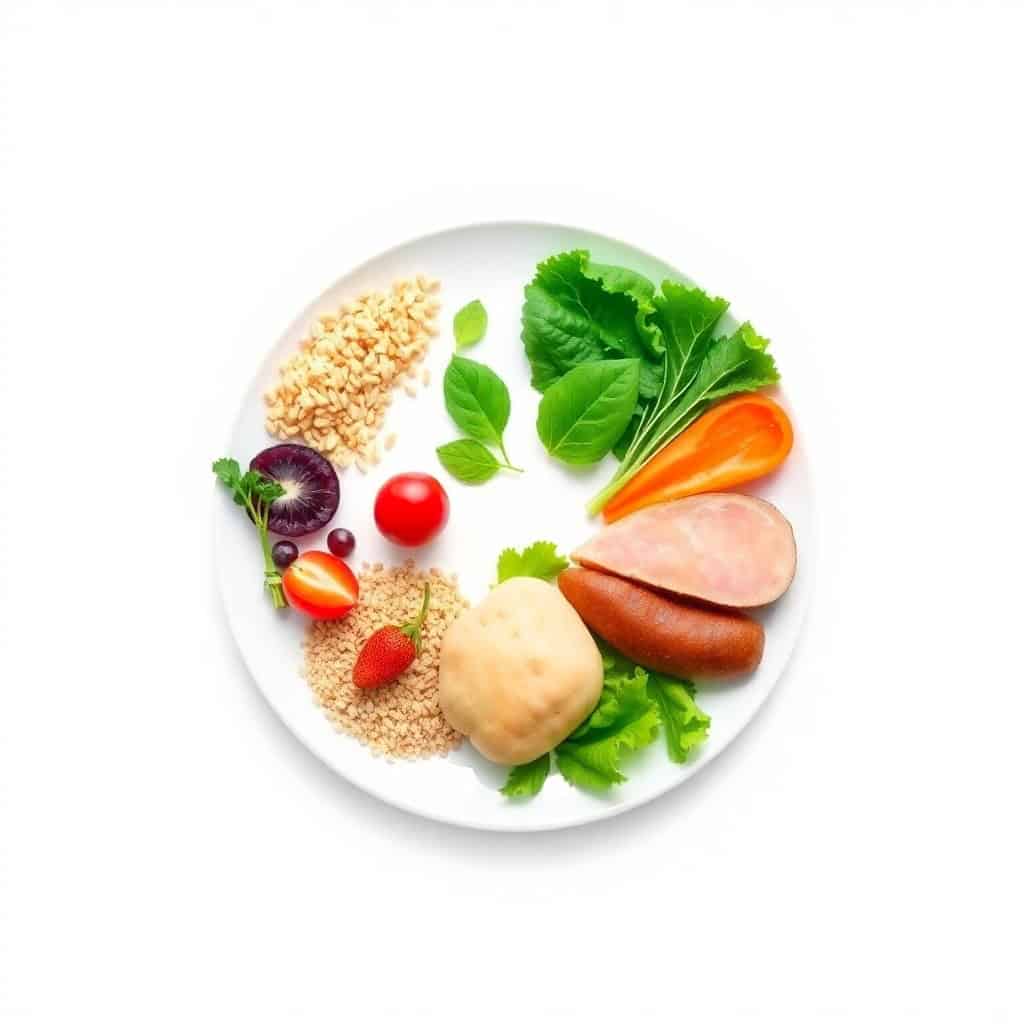
Whole foods such as vegetables, fruits, legumes, whole grains, lean proteins, and healthy fats support immune function and reduce chronic inflammation. Natural sugars consumed within fiber-rich foods behave very differently from added sugars.
Understand Why Cravings Matter
Excess sugar intake is often driven by emotional and behavioral factors rather than biology alone. Understanding why we crave sugar can help create sustainable change without guilt or extremes.
Be Thoughtful About Supplements
Many people attempt to “offset” sugar or dietary choices with supplements, despite limited evidence. We explore this misconception in Are supplements a modern necessity?
Maintain Perspective and Compassion
No one develops cancer because they enjoyed dessert. Food guilt adds stress, not protection. Health decisions should empower—not blame.
The Bottom Line
Sugar does not directly “feed” cancer in the way popular culture suggests. You cannot starve cancer through dietary sugar elimination alone. What truly matters is long-term metabolic health, weight management, inflammation control, and overall dietary quality.
Focus on nourishing your body, supporting resilience, and letting evidence—not fear—guide your choices.
References
- World Cancer Research Fund / American Institute for Cancer Research. Diet, Nutrition, Physical Activity and Cancer: A Global Perspective (Continuous Update Project Expert Report). WCRF. Evidence shows dietary patterns and body weight affect cancer risk. https://www.wcrf.org/diet-activity-and-cancer/
- American Institute for Cancer Research. Top Questions from Dietitians About Diet and Cancer: Does sugar “feed” cancer? Research finds **no direct link** between sugar intake and cancer; obesity and metabolic dysregulation are key risk factors. https://www.aicr.org/resources/blog/top-questions-from-dietitians-about-diet-and-cancer/
- American Cancer Society. Diet and Physical Activity and Cancer Prevention: Healthy living guidelines on body weight, diet quality, and cancer risk. https://www.cancer.org/cancer/risk-prevention/diet-physical-activity.html
- Vander Heiden MG, Cantley LC, Thompson CB. Understanding the Warburg effect: the metabolic requirements of cell proliferation. Science. 2009;324(5930):1029–1033. https://www.science.org/doi/10.1126/science.1160809
- Lauby-Secretan B, Scoccianti C, Loomis D, et al. Body fatness and cancer — viewpoint of the IARC Working Group. New England Journal of Medicine. 2016;375(8):794–798. https://www.nejm.org/doi/full/10.1056/NEJMsr1606602
- Gallagher EJ, LeRoith D. Obesity and diabetes: the increased risk of cancer and cancer-related mortality. Physiological Reviews. 2015;95(3):727–748. https://journals.physiology.org/doi/full/10.1152/physrev.00030.2014
Table of Contents
1. Does eating sugar directly cause cancer?
No. According to the National Cancer Institute (NCI) and MD Anderson, there is no evidence that sugar is a carcinogen (a substance that directly damages DNA to cause cancer). While a high-sugar diet is linked to increased risk, the connection is indirect—primarily through weight gain and metabolic changes rather than the sugar molecules themselves.
2. Does sugar “feed” cancer cells and make them grow faster?
Technically yes, but with a major catch. Every cell in your body, including healthy ones, uses glucose (blood sugar) for energy. While cancer cells are metabolically active and consume glucose faster than healthy cells, the Mayo Clinic notes that there is no evidence that eating more sugar makes cancer grow faster, nor does cutting it out entirely make cancer shrink or disappear.
3. Does the sugar used in PET scans prove that sugar feeds cancer?
This is a common misunderstanding. PET scans use a radioactive tracer (a form of glucose) to identify tumors because cancer cells absorb it more quickly than most healthy tissues. However, the American Cancer Society clarifies that this is a diagnostic tool and does not mean that dietary sugar is “fueling” the cancer’s growth in a way that wouldn’t happen if you ate less sugar.
4. If I stop eating sugar, will my cancer stop growing?
No. Depriving your body of sugar does not starve cancer. If you stop eating carbohydrates, your body will break down fat and protein to create its own glucose (a process called gluconeogenesis) because your brain and organs require it to function. The National Cancer Institute warns that extreme sugar restriction can lead to malnutrition and a weakened immune system, which can actually hinder cancer treatment.
5. Is there an indirect link between sugar and cancer risk?
Yes, primarily through obesity. This is the strongest evidence-based link. High consumption of added sugars (like those in sodas and processed snacks) often leads to excess calorie intake and weight gain. The CDC identifies obesity as a major risk factor for 13 different types of cancer because excess body fat creates chronic inflammation and alters hormone levels (like insulin and estrogen) that can promote cancer development.
6. Are natural sugars (like those in fruit) safer than added sugars?
Yes. Natural sugars found in fruits, vegetables, and dairy come packaged with fiber, vitamins, and minerals. The Cancer Council recommends these because fiber helps regulate blood sugar levels and prevents the “spikes” in insulin that are associated with cancer risk. “Added sugars” found in processed foods provide “empty calories” and are the ones health experts suggest limiting.
7. Should I use artificial sweeteners instead to avoid the risk?
The evidence is inconclusive. While some people switch to artificial sweeteners to avoid sugar’s calories, the World Health Organization (WHO) has categorized certain sweeteners like aspartame as “possibly carcinogenic,” though only in extremely high doses that humans rarely consume. Most oncology dietitians recommend moderation for both sugar and artificial sweeteners, focusing instead on whole foods.

Life in Balance MD is led by Dr. Amine Segueni, a board-certified physician dedicated to delivering clear, evidence-based health insights. His passion is helping readers separate facts from myths to make smarter, healthier choices. Content is for educational purposes only and not a substitute for medical advice.
- Amine Segueni, MD

- Amine Segueni, MD
- Amine Segueni, MD

- Amine Segueni, MD