
Ditch the Myth: The Truth About Sleep Position and Brain Detox
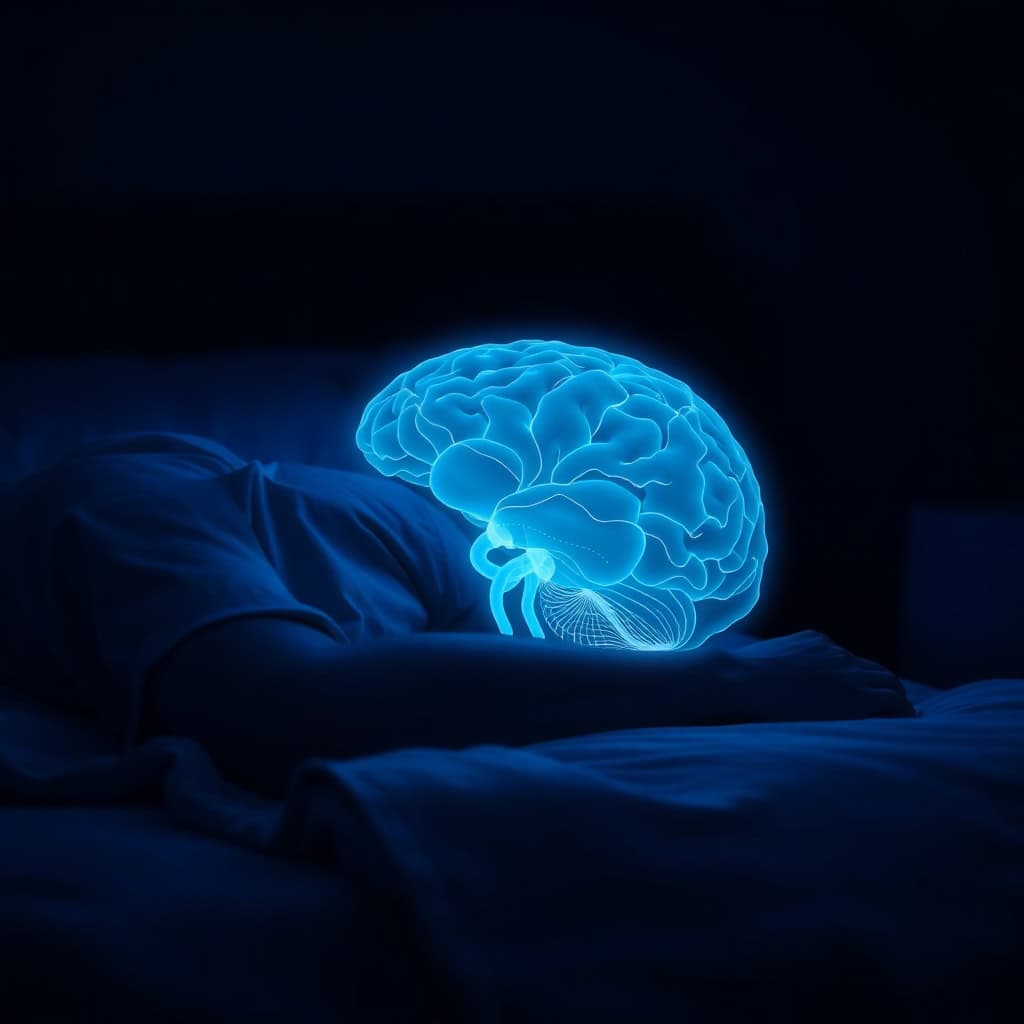
For years, a compelling claim has circulated online and in wellness circles: sleeping on your side is best for brain health, while sleeping on your back could dramatically reduce your brain’s nightly “cleaning” process.
It’s a seductive idea. It turns the ordinary act of sleeping into an optimized biological ritual. But science rarely works that cleanly. While the claim traces back to legitimate neuroscience research, the conclusion most people encounter today bears little resemblance to what the data actually show.
This article unpacks how a single animal study evolved into a viral sleep commandment—and why the evidence does not support posture-based brain detox rules.
Where the Claim Came From
The story begins with a genuine scientific breakthrough. In 2013, researchers described the glymphatic system in mice—a brain-wide network that uses cerebrospinal fluid (CSF) to help clear metabolic waste during sleep. This discovery reshaped how scientists think about sleep, brain health, and neurodegenerative disease.
The myth took hold in 2015, when a follow-up study published in The Journal of Neuroscience examined whether body position affected glymphatic transport. Using MRI and fluorescent tracers, researchers observed differences in CSF–interstitial fluid exchange in anesthetized rodents placed in different positions.
The lateral (side-lying) position showed greater glymphatic transport compared with the supine (back) and prone (stomach) positions. The findings were intriguing—and cautious. The authors emphasized the need for human research and did not make lifestyle recommendations.
Somewhere between the lab and social media, nuance disappeared. A relative difference observed in rodents became a definitive human rule: “Sleeping on your back cuts brain detox in half.”
What the Glymphatic System Actually Does
The glymphatic system functions as the brain’s waste-clearance pathway. During deep, non–rapid eye movement (non-REM) sleep, cerebrospinal fluid flows along perivascular spaces, facilitating the removal of metabolic byproducts such as beta-amyloid and tau proteins.
This process is closely tied to sleep state. Neural activity slows, interstitial space expands, and fluid exchange becomes more efficient. Importantly, glymphatic activity reflects sleep quality—not conscious behaviors or static body positions.
Because impaired waste clearance is implicated in neurodegenerative disease, the glymphatic system is an active area of research. But its complexity resists simplistic “hacks.”
What the Journal of Neuroscience Study Really Found
The 2015 study did not demonstrate that sleeping on your back stops brain detoxification. It showed relative differences in tracer movement between positions in anesthetized rodents during a controlled imaging protocol.
No human participants were studied. No natural sleep was observed. No long-term outcomes were measured. The researchers did not quantify total waste clearance, nor did they propose posture-based health advice.
Crucially, the frequently cited “50% reduction” figure does not appear anywhere in the data. It is not an extrapolation. It is not an estimate. It is an invention.
Why Animal Studies Don’t Translate Cleanly to Humans
Animal models are invaluable for discovery, but they have limits. Rodents differ from humans in neuroanatomy, sleep architecture, and cerebrospinal fluid dynamics. They are also habitual side-sleepers, which complicates posture comparisons.
Additionally, the study used anesthesia—not physiological sleep. Anesthesia alters vascular tone, respiration, and CSF flow in ways that do not replicate natural human sleep. Humans also change positions frequently throughout the night, making static posture assumptions unrealistic.
Extrapolating a precise, quantitative health rule for humans from this experimental setup is scientifically unjustified.
The Problem With “Hours of Brain Cleaning”
The idea that sleep provides a fixed number of “cleaning hours” misunderstands sleep biology. Glymphatic activity is not a stopwatch-driven process that can be halved by posture choice.
Instead, it fluctuates with sleep depth, continuity, and circadian regulation. Fragmented sleep reduces glymphatic efficiency far more than body position ever could. A person sleeping deeply on their back is likely achieving more effective waste clearance than someone sleeping lightly on their side.
The brain does not grade your sleep posture. It responds to sleep quality.
What Actually Supports Healthy Brain Waste Clearance
Evidence consistently points to foundational factors rather than positional micromanagement. Adequate sleep duration and continuity are central, with most adults requiring seven to nine hours of restorative sleep.
Deep sleep is particularly important. Consistent schedules, a cool and dark sleep environment, and minimizing late-night screen exposure all support slow-wave sleep.
Cardiovascular health also matters. Regular physical activity and metabolic health influence cerebral blood flow, which interacts with glymphatic function.
Finally, sleep-disordered breathing deserves attention. If sleeping on your back worsens snoring or sleep apnea, side-sleeping may improve brain health—not by enhancing detox, but by preserving uninterrupted sleep.
The Takeaway: Don’t Let Sleep Myths Steal Your Sleep
The side-sleeping brain detox myth is a classic case of science losing its context on the way to virality. An interesting animal finding became a rigid human rule, complete with invented numbers and unnecessary anxiety.
Good science invites curiosity. Bad science demands obedience.
The real harm of such myths isn’t merely that they’re incorrect—it’s that they distract from what actually matters. Sleep deeply. Sleep consistently. Sleep enough.
Your best sleep position is the one that allows you to wake up restored. Your brain’s cleaning crew cares far more about sleep quality than pillow geometry.
References
1. Iliff JJ et al. A paravascular pathway facilitates CSF flow through the brain parenchyma and the clearance of interstitial solutes. Science Translational Medicine. 2013;5(183):183ra57. PubMed
2. Lee H et al. The effect of body posture on brain glymphatic transport. Journal of Neuroscience. 2015;35(31):11034–11044. PubMed
3. Xie L et al. Sleep drives metabolite clearance from the adult brain. Science. 2013;342(6156):373–377. PubMed
Table of Contents
1. Is there a “best” side to sleep on for brain health?
While the Journal of Neuroscience study highlighted the lateral position generally, some researchers suggest the left side might have a slight edge due to cardiovascular and lymphatic flow. However, in humans, the “best” side is often the one that prevents sleep apnea or chronic pain, as fragmented sleep is far more damaging to brain detox than any specific posture.
2. What exactly is the “waste” being cleared during sleep?
The glymphatic system primarily clears metabolic proteins, most notably amyloid-beta and tau proteins. These are the same proteins that, when they accumulate into plaques and tangles, are hallmark signatures of Alzheimer’s disease and other neurodegenerative disorders.
3. Can sleeping on your back cause “brain fog”?
There is no direct evidence that sleeping on your back causes cognitive decline in healthy individuals. However, for those with Obstructive Sleep Apnea (OSA), sleeping on the back (supine) often worsens airway collapse. This leads to intermittent hypoxia (low oxygen), which significantly impairs the brain’s ability to clear toxins and results in morning “brain fog.”
4. Does the brain only detox during deep sleep?
The glymphatic system is most active during Slow-Wave Sleep (N3 stage). Research indicates that during this stage, the interstitial space in the brain increases by up to 60%, allowing cerebrospinal fluid (CSF) to flow through and “wash” the tissue. If you aren’t reaching deep sleep, your position matters very little.
5. Can a specific pillow or mattress improve my “brain detox”?
Currently, there is no peer-reviewed evidence that a specific retail product can enhance glymphatic clearance. The “myth” often stems from marketing. The best pillow is simply one that maintains spinal alignment to ensure you don’t wake up frequently, as sleep continuity is the real driver of brain health.
6. Is the “Sleep Position/Brain Detox” link proven in humans?
It remains a correlation, not a confirmed causation. Most “strong” evidence comes from rodent studies. While human brains have a glymphatic system, it is much harder to measure in real-time. Scientists generally agree that while position plays a role, sleep duration and quality are the heavy hitters for neurological health.

Life in Balance MD is led by Dr. Amine Segueni, a board-certified physician dedicated to delivering clear, evidence-based health insights. His passion is helping readers separate facts from myths to make smarter, healthier choices. Content is for educational purposes only and not a substitute for medical advice.
- Amine Segueni, MD

- Amine Segueni, MD
- Amine Segueni, MD
- Amine Segueni, MD